Home Contact Us Search Recent Additions Receive
Publications
Site Map

A A ATEXT SIZE  


RTC:RURAl

Ruralfacts: Rural Transportation


We all need transportation-- to work or school, to shop, to visit friends and family, to go to church or keep an appointment -- whether we live in the city, country or small town. Ideal transportation is reliable, convenient, safe, affordable, and physically-accessible.

Rural Public Transportation:  Who Needs It?

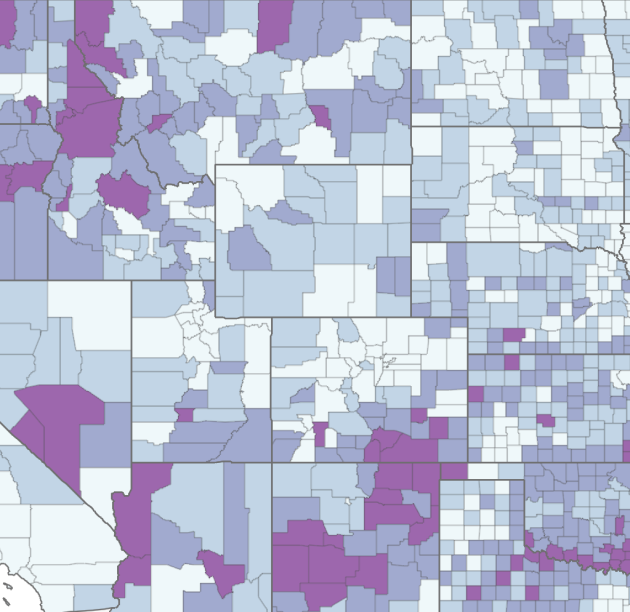
Of the 91 million people living in areas eligible for Section 5311 non-urbanized transportation services, more than a third are classified as transportation dependent because they have no personal transportation.

Description of Diagram.chart showing transportation dependent rural Americans

Rural residents make up 27 % of the U.S. population. However in 1996, only 5.5 % of Federal transportation funds were allocated to serve them (Status Report on Public Transportation in Rural America). Rural sidewalks and streets may not be paved, taxis are rare and expensive, and there are few full-size buses, commuter trains or subways. Where there is public transportation for people with disabilities, it is usually provided by vans (53%) or small buses (21%) that have restricted operating times and destinations. Half of these vehicles are past their life expectancies and 60% aren't wheelchair-accessible. Per capita, rural people own more private vehicles than urban people, but more than half of poor rural families don't own one--one out of thirteen rural households. What is the rural person who doesn't drive or who can't afford a car to do?

For 41 % of rural residents, there's NO public transportation available at all. Another 25 % live in areas where public transportation is extremely inadequate, providing fewer than 25 trips per year for each household without a personal vehicle. Lack of transportation is one of the most frequently cited problems facing people with disabilities living in rural areas.

Urban residents make up 73 % of U.S. population. In 1996, however, 94.5 % of Federal transportation funds were allocated to serve them. Daily, even people with disabilities choose from an array of transportation options: walking or wheeling on paved sidewalks, hiring taxis, or using accessible public buses, commuter trains, or subways. One out of six households in large urban areas doesn't own a car, but the availability of public transportation makes a personal vehicle unnecessary. Urban public transportation provides 955 trips annually for each household without a personal vehicle.

Description of Table

Rural Public Transportation: Who Uses It?
Rural residents who do use public transportation have some interesting, but not unexpected characteristics:

Characteristic

Percent of Rural Population

Percent of those using Public Transportation

Women

51%

62%

Elderly

18%

36%

People with Disabilities

13% (U.S. Census)

24%

Rural Public Transportation: Where are Rural Riders Going?

Rural riders use public transportation to accomplish basic daily tasks and to meet their basic needs:

  • 20% of rural riders commute to and from jobs or job training.
  • 17% travel to human service agencies (half of that number go to congregate meal programs).
  • 14 % keep medical appointments.
  • 13% do their shopping.
  • 36% do personal/family business, socialize or recreate.

Rural Public TransportationHow Can We Make It Better?

Currently, the expenditure of Federal funds between urban and rural areas is inequitable. Resources allocated to rural transportation should be increased to reflect rural needs. This doesn't mean that rural services can or should be identical to those available in urban areas-- there are creative rural solutions for rural problems. Rather, the policy goal should be to give rural residents with disabilities equal access to opportunities.

Changes in 49 U.S.C. 5311 can help accomplish this goal. In addition, since a large portion of rural transportation-dependent people are elderly or have a disability, the rural appropriation under 49 U.S.C. 5310 should be reconfigured. Although funds are allocated according to Census data, allocated funds must be spent equitably so those who need it most will have equal access to transportation.

For the two-thirds of rural residents with no or severely inadequate public transportation services, things can get better.It will take money, cooperation, and the kind of inventiveness that has always characterized rural people.

Rural Public Transportation: Promising Rural Strategies

Coordinated Models with Shared Vehicles:van transporting passengers

Agencies should be encouraged and rewarded for sharing vehicles and coordinating services. In New Mexico, an Independent Living Center and a community church have acquired and shared an accessible van. Areas of Michigan and Tennessee are exploring ways to use school buses as public transportation. LINK, Inc. of Hayes, Kansas, helped create a multi-county project through agency cooperation.

Volunteer Systems:

Volunteer drivers can be reimbursed for providing transportation to their friends, neighbors and co-workers. The RTC: Rural's Supported Volunteer Rural Transportation Voucher Program has been successful with this. The Community Transportation Association of America supports increased use of volunteers in rural transportation.

Voucher Systems:

Low-income riders can use transportation vouchers to reimburse community and human service agency transportation providers. Our Supported Volunteer Rural Transportation Voucher Program is a successful example.

Personal/Private Enterprise:

Interest-free loan programs that allow car-less households to purchase and maintain a vehicle can be established. Tennessee and Georgia are experimenting with this. Tennessee has also explored allowing individuals to pool transportation allotments to lease shared vehicles. Entrepreneurs can be encouraged to start their own transportation-on-demand small businesses.


For more information, please contact:

Tom Seekins, Director
Research and Training Center on Disability in Rural Communities,The University of Montana Rural Institute: A Center for Excellence in Disability Education, Research and Services,
52 Corbin Hall
Missoula, MT 59812-7056
406-243-2654  |(406) 243-4200 TTY  |  (406) 243-2349 Fax  | (888) 268-2743 Toll Free     email the Rural Institute

References

Status report on public transportation in rural America, 1994. (1995). Washington, DC: Community Transportation Association of America..

Atlas of public transportation in rural America, 1994. (1995). Washington, DC: Community Transportation Association of America.

Bernier, B. & Seekins, T. (1996a). Making Transportation Work for People with Disabilities in Rural America. Missoula: The University of Montana, Montana University Affiliated Rural Institute on Disabilities.

Bernier, B. & Seekins, T. (1996b). Rural transportation voucher program for people with disabilities: Three case studies. Missoula: The University of Montana, Montana University Affiliated Rural Institute on Disabilities.

Resources

Community Transportation Association of America,
1341 G Street, N.W., Suite 600,
Washington, DC 20005 | (202) 628-1480  | (800) 527-8279 | 
Fax: (202) 737-9197

Rural Transit Assistance Program,
Federal Transit Administration, Department of Transportation,
400 Seventh St., S.W.,
Washington, DC 20590 

Transportation Information Specialist,
Economic Research Service, USDA,
1800 M Street, N.W.,
Washington, DC 20036-5831 | (202) 694-5338 or (202) 694-5050


This publication is funded by grant # H133B70017-01 from the U.S. Department of Education.  The opinions reflect those of the authors and are not necessarily those of the Department of Education.

This RTC: Rural Factsheet was prepared by Diana Spas and Tom Seekins, © RTC: Rural, 1998. It is available in Braille, large print and ASCII DOS text formats on request.

Would you like to receive periodic updates about our research and training activities? Do you have comments or suggestions about this site? E-mail requests, comments and suggestions to Diana Spas


NIDR Logo