![]() |
Faith Based
Organizations:
|
||||||||||||||||||||||||||||||||||||||||||||||||||||||||||||||||||||||||||||||||||||||||||||||||||
|
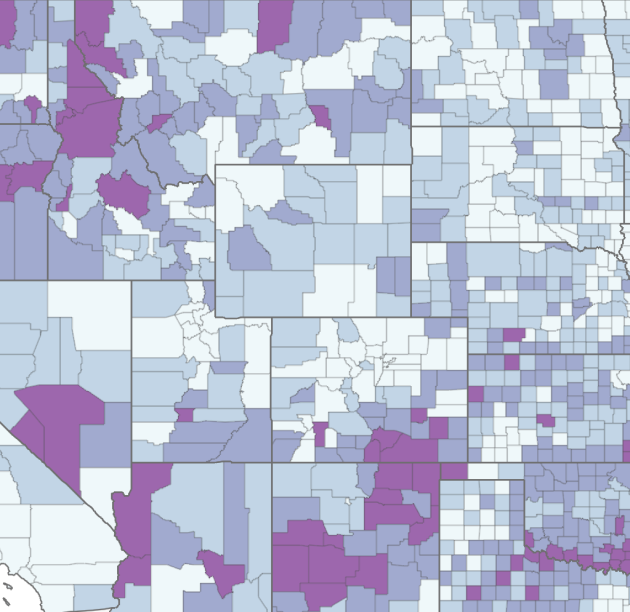
Twelve million rural Americans, 41% of the rural population, live in counties with no public transportation (Rural Transit Assistance Program,1995; Community Transportation Association of America [CTAA], 1995). The Transportation Equity Act for the 21st Century: a Legacy for Users provides new resources and means to address this problem. Still, rural people with disabilities and those who serve them report that the lack of transportation is one of their most significant and persistent problems (Gonzales, Seekins, & Kasnitz, 2001; Gonzales, Stombaugh, Kasnitz, & Seekins, 2006; National Council on Disability, 2005). Rural advocates, program planners, policy makers, and people with disabilities often suggest asking Faith-Based Organizations (FBO) to help provide transportation (e.g., Gonzales, Seekins, & Kasnitz, 1999/2000; CTAA, 2002). Proponents stress that FBOs are numerous and many have service missions that could augment scarce social resources. This presumes that many, if not most, FBOs own vehicles for transporting their members, and that they feel called to serve those with disabilities by providing basic transportation. However, no one could say how many FBOs own vehicles, or the extent to which they might provide accessible community transportation. Undoubtedly, some FBOs do own vehicles and do transport their own members. They may have certain barriers that prohibit them from also transporting community members. The frequently heard proposal that FBOs could solve rural transportation problems prompted us to survey rural FBOs to assess their interest in providing local transportation and their capacity to do so. Key Terms:Communities of Faith - Not all congregations have a permanent facility, nor do
all congregations with such a facility refer to it as a church. The more
important concept is the community of those who profess a shared faith. MethodThere are 365,312 U.S. churches with telephone book listings. Of these,
approximately 119,823 are located in non-metropolitan counties. The great number
and variety of faith communities creates challenges in developing research
samples. In order to conduct a national survey of rural FBOs, we randomly
selected 716 FBOs, each located within 15 miles of a center for independent
living (CIL) identified as "rural". Forty percent (N = 288) of their
congregational leaders responded to our mailed survey. FindingsThe average respondent led a faith community of 300 worshiping adults,
of whom 9.5% were estimated to have a significant disability. Most (98.4%)
respondents led a Christianity-based FBO. Most respondents were neither willing
nor unwilling to provide transportation to the general public or to people with
disabilities, but 32% said they would be willing or very willing to do so. Table 1. Number and Percent of FBOs (by Rothauge's Typology) Endorsing Barriers to Providing Transportation Description of Table 1
Table 2. Number and Percent of FBOs (by Rothauge's Typology OR Rural Categories) Endorsing Supports Required for Becoming Involved in Providing Transportation
LimitationsWhile this study used a random national sample of rural FBOs, selection was predicated on the proximity to centers for independent living in non-metropolitan counties. CILs are not randomly-located, however. They are most likely located in "central market" communities to maximize efficiency. As such, the findings of this study may not generalize to all rural FBOs. Recommendations and Next StepsWhile most respondents were ambivalent, 32% indicated they were willing or very willing to become involved in transportation. Therefore, transportation advocates may want to invite local inter-denominational organizations to help develop local transportation. In communities without organized transportation systems, FBOs may want to convene local transportation planning meetings. Leaders of faith communities can serve as "honest brokers" by calling and chairing such meetings. ReferencesCommunity Transportation Association of America. (1995). Atlas of Public Transportation in Rural America, 1994. Washington, DC: Author. Gonzales, L., Seekins, T. & Kasnitz, D. (2001). Rural Policy Brief: Rural Transportation for People with Disabilities -- Transportation Equity Act of the 21st Century (TEA 21) 2003 Reauthorization. Missoula: The University of Montana Rural Institute. Gonzales, L., Seekins, T. & Kasnitz, D. (1999/2000, Fall/Winter). Taking on rural transportation. Common Threads, 13-15. Missoula: Montana University Affiliated Rural Institute on Disabilities. Gonzales, L., Stombaugh, D., Seekins, T. & Kasnitz, D. (2006). Accessible rural transportation: An evaluation of the Traveler's Cheque Voucher Program. Community Development: Journal of the Community Development Society, 37, 3, 106-115.
Jeskey, C. & Bush, M. (2002). Our Role in the Process: A Grassroots Guide to
Building Community-based Employment Transportation. Washington, DC: Community
Transportation Association of America & Center for Community Change. For more information, contact: Tom Seekins, Director Grant #H133B030501 from the National Institute on Disability and Rehabilitation
Research, U.S. Department of Education supports our research. The opinions
expressed are the author's and are not necessarily those of the funding agency. |
|||||||||||||||||||||||||||||||||||||||||||||||||||||||||||||||||||||||||||||||||||||||||||||||||||